
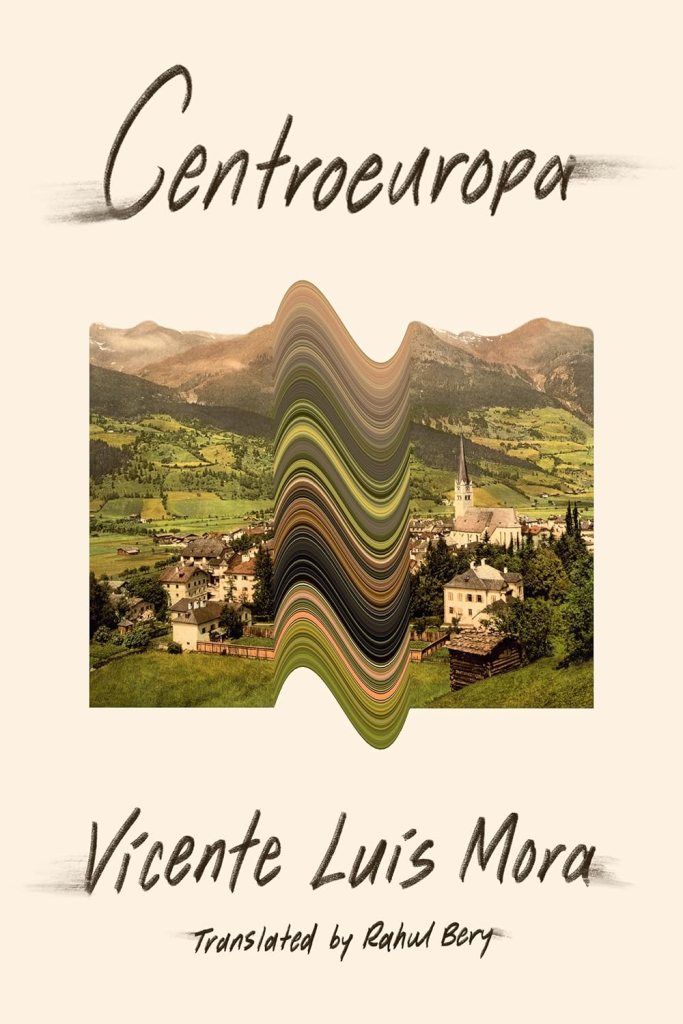
Review: Centroeuropa

Title: Centroeuropa
Author: Vicente Luis Mora
Translator: Rahul Bery
Pages: 192
Release: March 10, 2026
Awards: National Book Award for Translated Literature shortlist (2026)


A wonderfully strange tale with an incredibly endearing protagonist. Centroeuropa centers on Redo Hauptshammer, the first free farmer to settle in a small Prussian village beside the Oder River. While digging a plot for his recently departed wife, Redo unearths groups of frozen dead soldiers from conflicts past and seemingly yet to come. Redo erects walls, both literal and figurative, to keep his discovery and his own secrets from the quirky cast of townsfolk inhabiting the surrounding hills.

Redo recounts the whole ordeal in his charming and often unreliable manner, complete with a sprinkling of the fantastical: a local witch who can see the future, a giant of fluctuating size, and Redo’s ever-expanding collection of frozen bodies.

The novel confronts the thornier edges of progress while quite literally digging up the past. History clings stubbornly to Redo’s plot of land, leaving him yoked to the past even as he struggles to cultivate a new life.

If you want a companion story (also in translation), this time from the perspective of a frozen corpse who thaws out, I recommend Strange and Perfect Account from the Permafrost.

★★★★
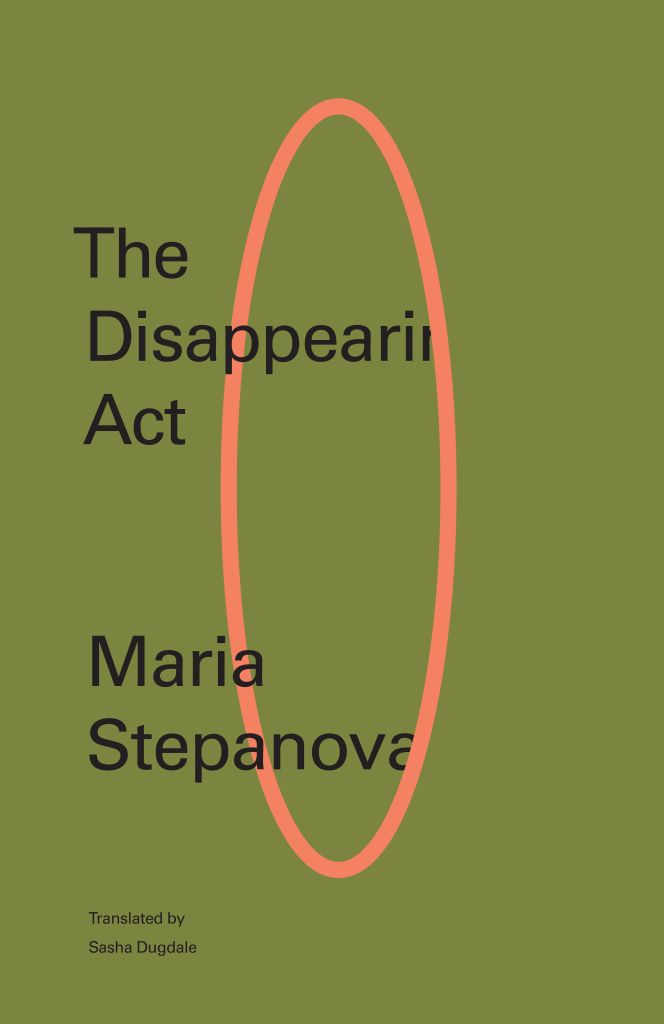
Review: The Disappearing Act

Title: The Disappearing Act
Author: Maria Stepanova
Translator: Sasha Dugdale
Pages: 144
Release: February 17, 2026
Awards: National Book Award for Translated Literature longlist (2026)


The travelogue of a disaffected transplant who leaves her country behind physically, even as her sense of self remains firmly ensconced there—a vestigial appendage of Mother Russia, or “the beast,” the mostly unnamed country whose actions bring her shame and guilt. “The only way to get rid of the beast is to get rid of herself,” Stepanova surmises.

I found this quite engaging and sharp in the way M works through her observations about the world and what is happening inside her own head, all while maintaining a gauzy, dreamlike narrative quality. But that interiority also makes for an intentionally unfocused narrative. M’s thoughts spin far and wide, occasionally mesmerizing in their strange associations but not always holding my attention as they drift further afield.

Finally, proof that running off to join the circus is sometimes the best course of action when trying to escape your past!

★★★

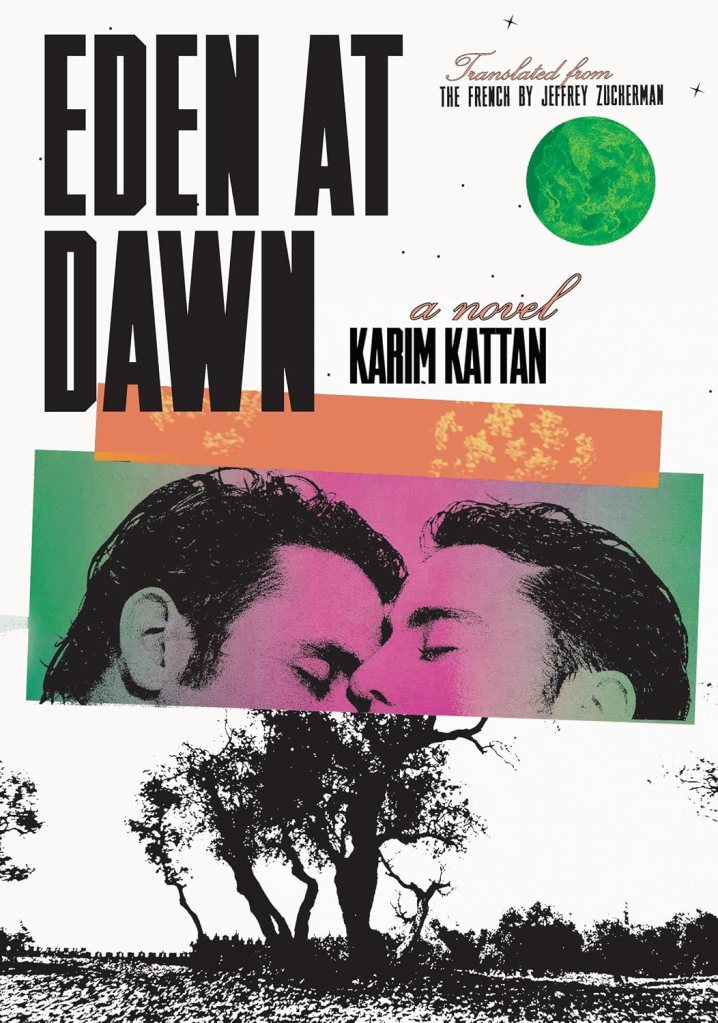
Review: Eden at Dawn

Title: Eden at Dawn
Author: Karim Kattan
Translator: Jeffrey Zuckerman
Pages: 288
Release: September 22, 2026
Awards: National Book Award for Translated Literature longlist (2026)


A love that transcends borders and curfews and occupation and a massive, summers-long sandstorm.

Karim Kattan’s writing, coupled with Jeffrey Zuckerman’s translation, makes for pure poetry. Told from the perspective of the sky—our cheeky and playful narrator—the story is unwieldy and unconventional. The sky is enamored with Isaac and Gabriel, seeking them out in every nook and cranny under its domain in order to bring their story to life.

It’s an intensely felt love story imbued with magic and wonder, where it’s often difficult to distinguish reality from fable.

I loved the way Kattan plays with color to enliven an undersaturated, sandswept world. Rarely are things described beyond simple reds, blues, and greens, but the frequency and repetition of these colors in different combinations consistently conjure vivid and lively imagery.

It caught me off guard in the best possible way, and even when its unconventional approach didn’t entirely work for me, its beauty and emotional pull kept me hooked throughout.

★★★¾

My thanks to Edelweiss+ and the publisher for providing an advanced copy in exchange for an honest review.

Review: If We Cannot Go at the Speed of Light

Title: If We Cannot Go at the Speed of Light
Author: Kim Cho-yeop
Translator: Anton Hur
Pages: 192
Release: May 7, 2026


An inventive and intriguing blend of science fiction storytelling. Thoughtful and consistently engaging, even if it lacks a true knockout punch. I much preferred Kim’s stories that lean into explorations of what it means to be human, like “Symbiosis Theory,” where a woman paints images from a fictional planet that turns out to be very real, or “Spectrum,” which centers our shared humanity as a woman recounts her time deep in space and her discovery of a planet inhabited by sentient, bipedal aliens with their own unique culture.

No single story truly wowed me, but I found this to be a worthwhile collection all the same.

Favorite stories: “Spectrum,” “Symbiosis Theory,” “My Space Hero”

★★★

My thanks to NetGalley and the publisher for providing an advanced copy in exchange for an honest review.

Review: Hunger: A Novel

Title: Hunger: A Novel
Author: Choi Jin-Young
Translator: Soje
Pages: 208
Release: May 12, 2026


A moving, melancholic love story – tender and full of heart, with just a dash of cannibalism. Soje’s translation is beautifully rendered, capturing the quiet intensity between Gu and Dam. The alternating pre- and post-mortem perspectives are both effective and deeply affecting, revealing how closely attuned they are to one another. A quick, sorrowful, yet ultimately love-affirming read.

★★★¼

My thanks to NetGalley and the publisher for providing an advanced copy in exchange for an honest review.

Review: The Lucky Ride

Title: The Lucky Ride
Author: Yasushi Kitagawa
Translator: Takami Nieda
Pages: 272
Release: October 7, 2025


What a lovely book.

The resident cynic in me was utterly charmed by this heartwarming tale of a down-on-his-luck insurance salesman who stumbles into a mysterious taxi that changes his life. Told as a parable, the story delivers a simple but moving message about living with positivity and generosity.

The “luck” the characters accumulate is the result of good deeds, but it functions more like karma than chance. Your choices add up, and their effects ripple outward, benefiting not only you but also future generations of your family. Good actions lead to good outcomes…eventually.

The Alchemist meets The Good Place: the messaging is straightforward, yet life-affirming and emotionally resonant. It won’t change your life, but it will put a smile on your face.

★★★★

My thanks to the publisher and Edelweiss for an advanced reader copy in exchange for an honest review.

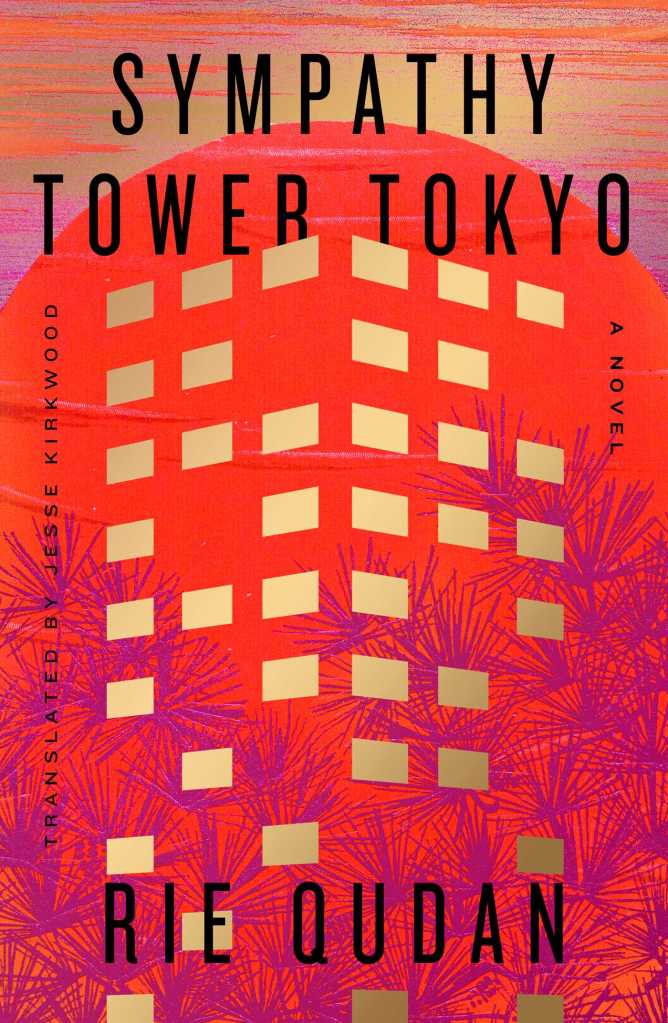
Review: Sympathy Tower Tokyo

Title: Sympathy Tower Tokyo
Author: Rie Qudan
Translator: Jesse Kirkwood
Pages: 208
Release: September 2, 2025


In near-future Japan, all criminals, now reclassified as Homo miserabilis, are considered victims of circumstance and are treated with extreme empathy. They are housed together in Sympathy Tower Tokyo, a hyper-egalitarian facility with conditions so humane that prisoners prefer to stay even when offered their freedom. The book follows Sara Machina, the tower’s architect, who grapples with the ethical consequences of her creation.

Qudan’s novel is surreal and conceptually fascinating, but ultimately left me cold. Its unclear structure and indistinct points of view make the narrative feel scattered and emotionally distant. For a story so rooted in the idea of empathy, it’s curiously devoid of warmth – an effect that may be intentional, but left me feeling hollow by the end.

Qudan’s meditation on the evolution of the Japanese language is compelling, particularly the universal idea that “words determine our reality,” a theme that threads itself throughout the book. Still, whether due to Jesse Kirkwood’s translation or the source text itself, Sympathy Tower Tokyo never quite connected for me.

Note: in keeping with the source material – roughly 5% of this review was generated with AI.

★★★

My thanks to the publisher and NetGalley & Edelweiss for an advanced reader copy in exchange for an honest review.

Review: Chilco


“The landscape we live in is falling apart; what we once loved is vanishing. Tomorrow seems to us an obsolete discourse, a privilege of past decades”

Title: Chilco
Author: Daniela Catrileo
Translator: Jacob Edelstein
Pages: 272
Release: July 15, 2025


An evocative meditation on colonialism, dispossession, and identity. Chilco unfolds in a city literally falling apart, while Mari’s collapse is more internal – she is caught between cultures, histories, and her own fractured sense of belonging. She grapples with the tension between rootedness and displacement, both within herself and those close to her. What is worth clinging to, and what can be left behind?

Catrileo’s writing is tender and quite lovely – more a breeze than a gale force wind. Subtle yet deeply moving.  The book’s nonlinear structure feels unnecessary, but it did not diminish the power of its themes. 

Before reading this, I knew little of Chilean history or the oral tradition of the Mapuche people. Chilco served as a compelling introduction, sparking my interest for further exploration.

★★★¾

My thanks to the publisher and NetGalley for an advanced reader copy in exchange for an honest review.

Review: Dengue Boy

Title: Dengue Boy
Author: Michel Nieva
Translator: Rahul Bery
Pages: 224
Release: February 4, 2025


An economy propped up by pandemic speculation. Capitalism built on climate destruction. And a giant mosquito boy with poor impulse control. This gross, engrossing, and absurd phantasmagoria is a feast for the senses. While the plot feels a bit thin, the absurdity and off-the-wall weirdness kept me intrigued. I enjoyed my time here, but Dengue Boy won’t be for everyone.

★★★½

My thanks to the publisher and Edelweiss for an advanced reader copy in exchange for an honest review.