Review: The Lucky Ride

Title: The Lucky Ride
Author: Yasushi Kitagawa
Translator: Takami Nieda
Pages: 272
Release: October 7, 2025


What a lovely book.

The resident cynic in me was utterly charmed by this heartwarming tale of a down-on-his-luck insurance salesman who stumbles into a mysterious taxi that changes his life. Told as a parable, the story delivers a simple but moving message about living with positivity and generosity.

The “luck” the characters accumulate is the result of good deeds, but it functions more like karma than chance. Your choices add up, and their effects ripple outward, benefiting not only you but also future generations of your family. Good actions lead to good outcomes…eventually.

The Alchemist meets The Good Place: the messaging is straightforward, yet life-affirming and emotionally resonant. It won’t change your life, but it will put a smile on your face.

★★★★

My thanks to the publisher and Edelweiss for an advanced reader copy in exchange for an honest review.

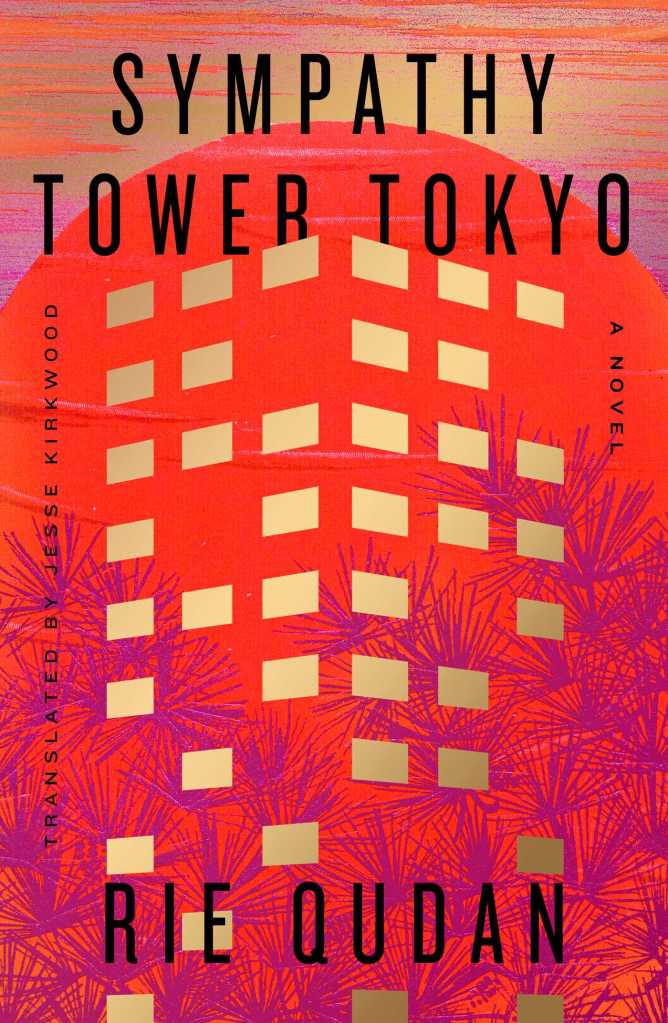
Review: Sympathy Tower Tokyo

Title: Sympathy Tower Tokyo
Author: Rie Qudan
Translator: Jesse Kirkwood
Pages: 208
Release: September 2, 2025


In near-future Japan, all criminals, now reclassified as Homo miserabilis, are considered victims of circumstance and are treated with extreme empathy. They are housed together in Sympathy Tower Tokyo, a hyper-egalitarian facility with conditions so humane that prisoners prefer to stay even when offered their freedom. The book follows Sara Machina, the tower’s architect, who grapples with the ethical consequences of her creation.

Qudan’s novel is surreal and conceptually fascinating, but ultimately left me cold. Its unclear structure and indistinct points of view make the narrative feel scattered and emotionally distant. For a story so rooted in the idea of empathy, it’s curiously devoid of warmth – an effect that may be intentional, but left me feeling hollow by the end.

Qudan’s meditation on the evolution of the Japanese language is compelling, particularly the universal idea that “words determine our reality,” a theme that threads itself throughout the book. Still, whether due to Jesse Kirkwood’s translation or the source text itself, Sympathy Tower Tokyo never quite connected for me.

Note: in keeping with the source material – roughly 5% of this review was generated with AI.

★★★

My thanks to the publisher and NetGalley & Edelweiss for an advanced reader copy in exchange for an honest review.

Review: Vanishing World

Title: Vanishing World
Author: Sayaka Murata
Translator: Ginny Tapley Takemori
Pages: 240
Release: April 15, 2025


An off-kilter and unsettling page-turner, Vanishing World tackles declining birth rates, widespread loneliness, social isolation, and the rise of unhealthy parasocial relationships – issues that feel even more relevant today than when this book was first published in Japan in 2015.

In a world where copulation has gone out of style, Amane longs for the days of old. Yet she quickly learns how difficult it is to swim against the current of established societal norms, no matter how bizarre they may be. Everyone around her feels slightly unhinged, as though facsimiles of real people, adding to Amane’s feelings of isolation. 

This was a tough one to put down and it certainly goes out with a bang. Murata’s dry, matter-of-fact prose is engrossing, even as she hammers home certain ideas and themes to the point of excess. 

★★★½

My thanks to the publisher and NetGalley for an advanced reader copy in exchange for an honest review.

Review: The City and Its Uncertain Walls

Title: The City and Its Uncertain Walls
Author: Haruki Murakami
Translator: Philip Gabriel
Pages: 464
Release: November 19, 2024


Our main character inhabits two parallel worlds—one is the “real world,” and the other is a “dream world” reminiscent of Susanna Clarke’s Piranesi: a nameless city with labyrinthine streets that feels disorienting yet mesmerizing.

The story is told in an understated and straightforward way, with little drama but plenty of pleasant imagery. Some elements felt downright cozy, though they lacked significant dramatic heft. The main character grapples with existential questions about his inner worldview and his sense of self, which are represented through the parallel worlds he experiences. Is the walled town a construct of his mind? A physical manifestation of the complex bond he shared with his first love? Who’s to say?

Murakami abandons the eponymous city for the “real world” early on, and the farther the narrative distances itself from that place, the harder it becomes—for both the main character and the reader—to return to what we once remembered. The plot clumsily attempts to weave these threads and worlds back together, but the resulting knot felt unsatisfying to me.

Many reviews have noted that Murakami has told similar stories more effectively in the past, so surely this is not the ideal book to start with as a Murakami neophyte—but here we are. I suspect I would connect better with his earlier works, as his writing and style resonated with me, but the story itself felt half-baked.

★★★

My thanks to the publisher and NetGalley for an advanced reader copy in exchange for an honest review.
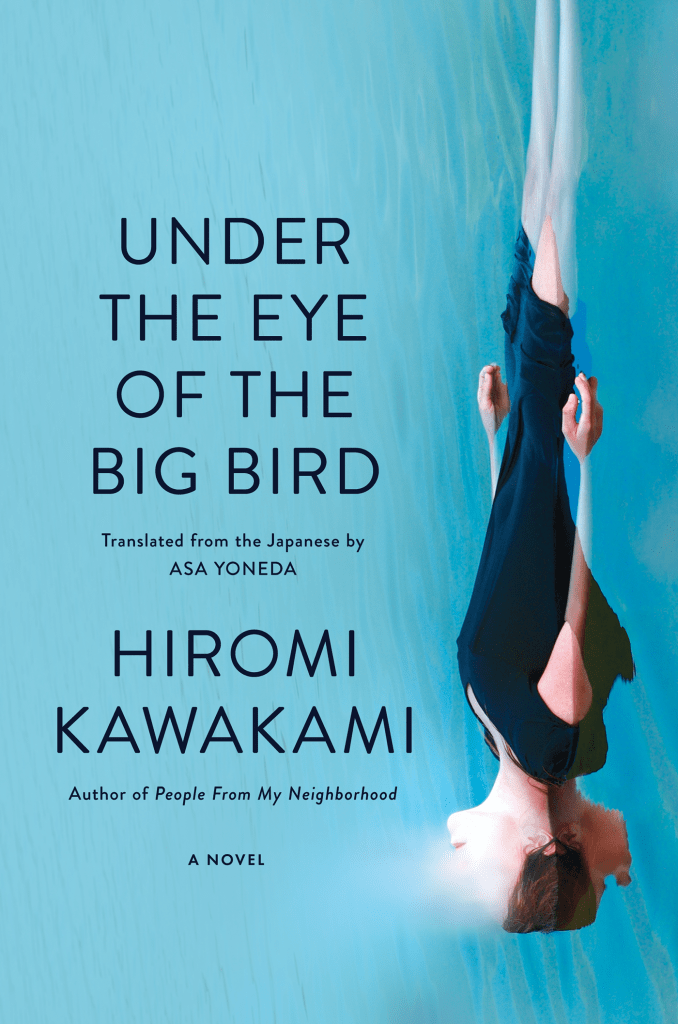
Review: Under the Eye of the Big Bird

Title: Under the Eye of the Big Bird
Author: Hiromi Kawakami
Translator: Asa Yoneda
Pages: 282
Release: September 3, 2024


An imaginative and disquieting take on the future of humanity. An entrancing read.


This was a fascinating read. In a world where humanity is nearing extinction, humans reform into small societies across the globe in a bid to survive, while mysterious and potentially malevolent forces guide them.

The timeline is purposely vague and disorienting, with hundreds or thousands of years passing from one chapter to the next. The aim is to see the broader strokes of the survival effort, but it kept me from fully connecting with any single character or society. 

While the pieces never fully clicked into place for me, I enjoyed the entire ride. Kawakami’s writing (via Asa Yoneda’s translation) is quite moving as it conveys a subtle beauty to the remade world. Fans of Sequoia Nagamatsu’s How High We Go in the Dark will surely find familiarity in form and function here.

★★★½

My thanks to the publisher and Edelweiss for an advanced reader copy in exchange for an honest review.